Is Slow Living Actually Achievable, or Just a Privilege for People With Free Time?
Quick Answer: Slow living isn’t about having more free time — it’s about how deliberately you use the time you already have, which makes it accessible even inside a demanding schedule, though it does require some baseline stability to practice consistently.
The Instagram version shows candlelit mornings and empty calendars. Most people reading this have neither. That doesn’t disqualify you.

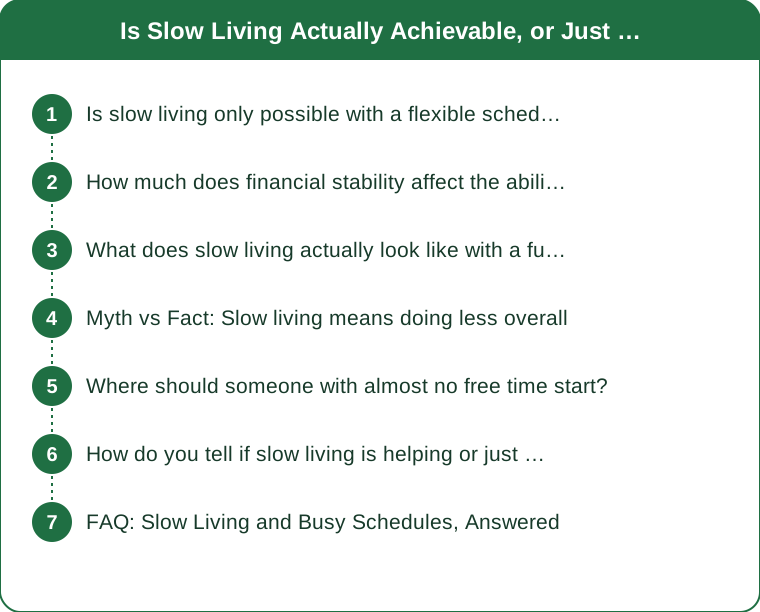
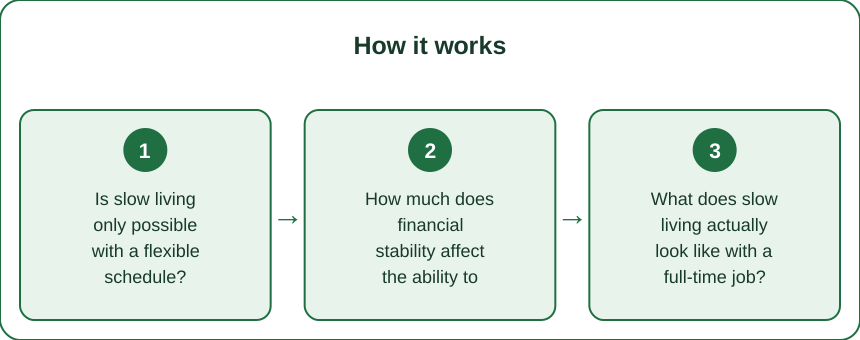
Is slow living only possible with a flexible schedule?
Not exactly — the aesthetic version often shown online does assume flexible time, but the core practice of slow living is about attention and intention within whatever time you have, not the total quantity of free hours. Someone with a demanding 9-to-5 can practice slow living during a 15-minute unhurried breakfast just as meaningfully as someone with an open afternoon.
How much does financial stability affect the ability to slow down?
Some baseline stability does matter — genuine survival stress makes it much harder to be present rather than anxious about logistics, and it would be dishonest to pretend otherwise. But slow living doesn’t require wealth or an empty schedule; it requires choosing not to fill every open minute with more input, which is a decision available at almost any income level, even if it’s harder to access under real financial strain.
What does slow living actually look like with a full-time job?
In practice, it’s smaller than the aesthetic suggests: eating one meal a day without a screen, taking a five-minute walk without a podcast, or leaving 20 minutes of true white space in your calendar instead of scheduling back-to-back. These are achievable regardless of how busy your job is, because they’re substitutions within existing time, not additions to it.

Myth vs Fact: Slow living means doing less overall
Myth: to live slowly, you need to reduce your total workload or responsibilities. Fact: slow living is more accurately about doing fewer things at once and giving more attention to each one, which is a different skill than simply having a lighter schedule — you can be busy and still practice it.
Where should someone with almost no free time start?
Start with a single anchor point rather than an entire lifestyle overhaul — one meal a day eaten without your phone, or the first 10 minutes after waking spent without checking notifications. Trying to slow your whole day down at once when your schedule is genuinely full usually backfires and feels like one more failed New Year’s resolution.
How do you tell if slow living is helping or just another pressure?
If practicing it starts to feel like another task you’re failing at, that’s a signal to shrink the goal further, not push harder. Slow living that creates its own stress has lost the point — the measure of success is whether you feel more present, not whether you’ve achieved a specific aesthetic or routine.
FAQ: Slow Living and Busy Schedules, Answered
Can slow living coexist with a demanding career?
Yes, though it usually looks like protected pockets of time rather than an entirely unhurried lifestyle, and that’s a realistic and valid version of the practice.
Do I need to quit multitasking completely to practice slow living?
No — the goal is reducing unnecessary multitasking during a few chosen moments each day, not eliminating it everywhere, which would be unrealistic for most jobs.
Is slow living just a trend that will fade?
The aesthetic packaging may shift, but the underlying idea, being present with less input, has been part of various wellness and mindfulness traditions for a long time and isn’t likely to disappear.
TL;DR:
- Slow living is about attention within your time, not needing more of it
- Financial stability helps but isn’t a strict requirement
- Start with one small daily anchor, not a full schedule overhaul
- If it feels like pressure, shrink the goal, don’t push harder
You don’t need an empty calendar to practice slow living — you need one part of your day where you stop stacking inputs, and that’s available to almost everyone.
Keep Reading
This article is for general informational and styling purposes only. Fit, sizing, and product availability may vary.