Slow Living Doesn't Mean Less Productive — Here's What Actually Changes
Quick Answer: Slow living doesn’t reduce how much you get done — it reduces how much you do at once. Most people who try it report the same output with noticeably less mental fatigue, because single-tasking cuts the switching cost that was quietly draining hours.
The fear is real: if you stop rushing, won’t everything fall apart? But rushing and productivity aren’t actually the same thing — they just feel connected because busyness looks like proof of effort.

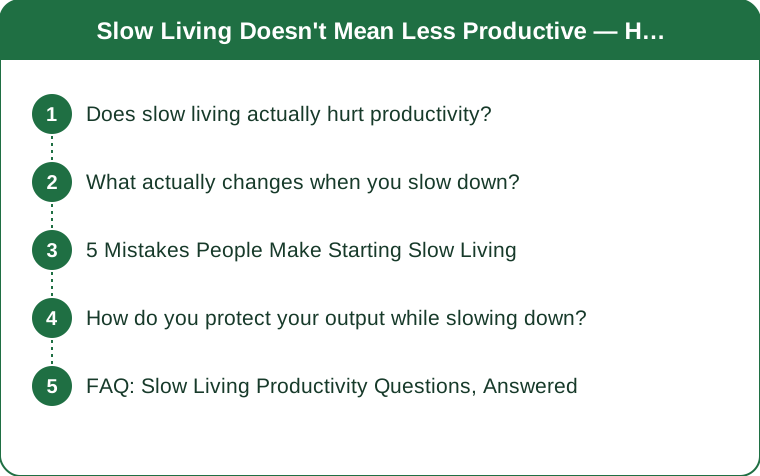
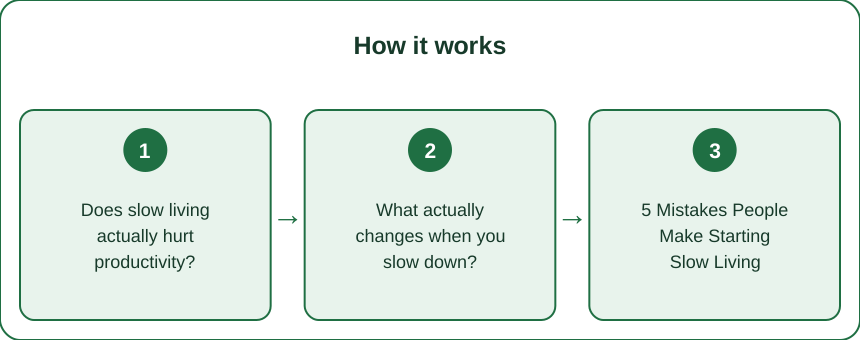
Does slow living actually hurt productivity?
Not in the way people expect. What slow living removes is task-switching, and switching costs are the real productivity killer — research on attention residue puts the recovery cost at several minutes per switch.
Someone doing 3 things “at once” often finishes slower than someone doing them one at a time, because every switch drags a little leftover attention from the last task.
What actually changes when you slow down?
Three things shift, and none of them is total output: decision fatigue drops, because you’re not making 40 micro-decisions about what to do next; error rate drops, because rushed work gets redone; and recovery time shrinks, because you’re not depleting focus on switching.
The visible change is often just a calmer face doing the same task list.

5 Mistakes People Make Starting Slow Living
1. Cutting commitments and calendar at the same time. Slow down the pace first; trim the list second — doing both at once causes panic, not calm.
2. Treating it as a personality change. It’s a set of habits (single-tasking, fewer notifications), not a new identity you have to prove.
3. Going slow only when convenient. The benefit shows up under mild pressure, not just on a free Sunday.
4. No output tracking. Without any measure, it’s easy to feel less productive even when output is identical — track it for 2 weeks to check.
5. All-or-nothing mornings. One slow ritual (coffee without a phone) beats a full slow-living overhaul that collapses by Wednesday.
How do you protect your output while slowing down?
Pick one single-tasking rule and apply it everywhere: one tab, one task, phone in another room. That’s the entire mechanism — everything else is optional atmosphere.
Track completed tasks for 2 weeks before and after. Most people find the number holds steady or rises slightly, because fewer things are getting half-started and abandoned.
FAQ: Slow Living Productivity Questions, Answered
Can slow living work with a demanding job?
Yes — it’s compatible with any workload because it’s about how you move through tasks, not how many you’re assigned. The rule is single-tasking, not fewer tasks.
How long before slow living feels normal instead of forced?
Most people report 3-4 weeks before the pace feels default rather than deliberate. The first 10 days feel the most awkward.
Is slow living the same as minimalism?
Related but different — minimalism is about fewer possessions and commitments; slow living is about pace. You can slow-live a full, busy life.
TL;DR:
- Slowing down cuts task-switching, which is the real productivity drain, not the pace itself
- Output usually stays flat or improves; what drops is fatigue and errors
- Trim commitments and pace separately, not on the same day
- One single-tasking rule (one tab, one task) is the whole mechanism
Slow living isn’t the opposite of getting things done — it’s often the fix for why things weren’t getting done well.
Keep Reading
This article is for general informational and styling purposes only. Fit, sizing, and product availability may vary.