A Realistic Slow Living Morning Routine (Not the 5am Pinterest Version)
Quick Answer: A realistic slow living morning doesn’t require waking up at 5am or having two free hours — it means removing 1-2 rushed, reactive habits (grabbing your phone first, skipping breakfast) and replacing them with a few minutes of intentional pace, even inside a normal, busy schedule.
Every slow living morning routine online seems to assume you have no job to rush to and no one else to get ready. That version isn’t realistic for most people — and it’s not actually required to get the benefit.

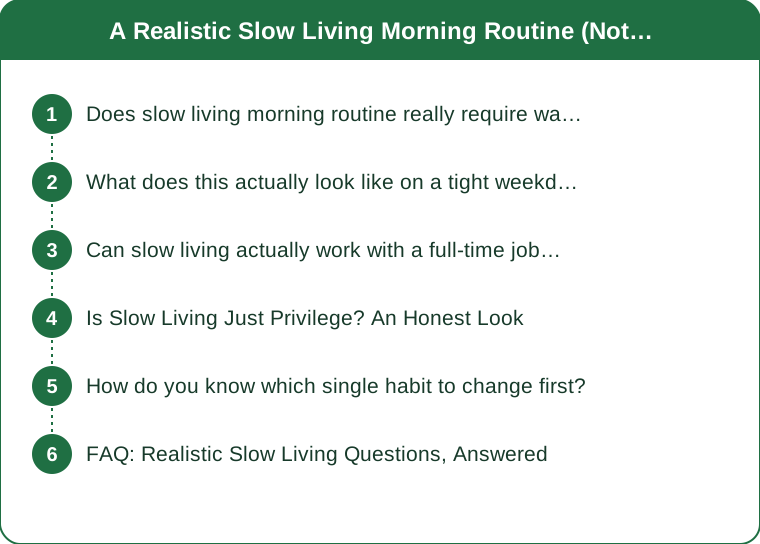
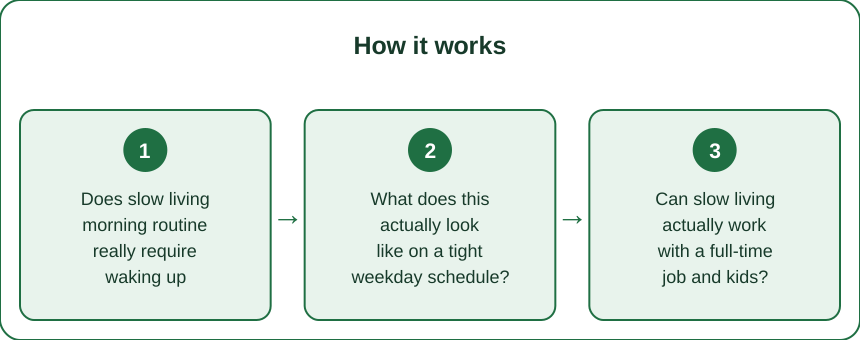
Does slow living morning routine really require waking up earlier?
No — it requires changing the first 10 minutes, not adding hours. The core idea isn’t about total time available, it’s about not starting the day in reactive mode (phone notifications, rushing, checking email before you’re even out of bed).
You can build a genuinely calmer first 10 minutes into a schedule that still has you out the door by a fixed time — it’s a sequencing change, not a time-block addition.
What does this actually look like on a tight weekday schedule?
Phone stays out of reach for the first 10 minutes — across a bedroom, not on the nightstand. Even with a full day ahead, those 10 minutes of not immediately absorbing notifications and headlines changes how the whole morning feels.
Eat something sitting down, even for 3 minutes, instead of standing at the counter or eating in the car. This single change is disproportionately linked to feeling less rushed for the rest of the day, according to most people who try it — it’s less about the food and more about the brief pause it forces.
Can slow living actually work with a full-time job and kids?
Yes, but the scope has to shrink to match the schedule you actually have — not the schedule an influencer with a flexible job has. For a parent with a 6:30am wake-up and kids to get ready, slow living morning realistically means one 5-minute pocket of intentional pace, not a full hour of journaling and stretching.
The honest answer: slow living with a demanding schedule is about protecting one small window, not restructuring the whole morning. Trying to force the full version onto an incompatible schedule is what makes people give up on it within a week.

Is Slow Living Just Privilege? An Honest Look
Partially, and it’s worth acknowledging. The aesthetic version — leisurely coffee, no rush, journaling by a window — does assume flexible time that not everyone has. That version is genuinely a privilege.
But the underlying principle (reducing reactive, rushed starts to the day) scales down to any schedule, even a tight one. The mistake is importing the aesthetic and expecting it to fit a life it wasn’t designed for, then concluding the whole idea doesn’t work. It’s not privilege-only if you scale it correctly.
How do you know which single habit to change first?
Pick whichever moment currently feels most rushed and reactive — for most people, that’s either the first phone check or a skipped/rushed breakfast. Fix that one thing for two weeks before adding anything else.
Adding multiple new habits at once (no phone + meditation + journaling + slow breakfast) in a busy schedule is a common reason slow living attempts fail within days — one change, sustained, beats four changes abandoned by Thursday.
FAQ: Realistic Slow Living Questions, Answered
Do I need to wake up earlier to try this?
No — most of the realistic version is about sequencing the first 10-15 minutes differently, not adding time you don’t have.
What if my mornings are genuinely too chaotic for any of this?
Start with the night before instead — laying out clothes or prepping breakfast the night before reduces morning chaos enough to open up a small window the next day.
Is it worth trying if I only have 5 minutes to spare?
Yes — even 5 minutes of not immediately reaching for your phone measurably changes how rushed the rest of the morning feels for most people who try it.
TL;DR:
- Slow living mornings are about sequencing, not needing extra free time
- Keep your phone out of reach for the first 10 minutes and eat sitting down, even briefly
- The aesthetic version does assume privilege — the underlying principle scales to any schedule
- Change one habit for two weeks before adding another
A realistic slow morning fits inside the life you already have — it doesn’t require rebuilding your schedule around it.
Keep Reading
This article is for general informational and styling purposes only. Fit, sizing, and product availability may vary.