Slow Living With a Full-Time Job: What's Actually Realistic
Quick Answer: Slow living on a full-time job isn’t about having more free hours — it’s about removing rushed, distracted transitions between the hours you do have. The highest-leverage changes are a slower morning buffer, a phone-free commute or lunch, and one genuinely unscheduled evening a week.
Most slow living content pictures someone with a flexible freelance schedule and a garden. You have a commute, a calendar full of meetings, and maybe 90 real minutes of unclaimed time on a good day. The philosophy still applies — it just has to fit a much smaller container.

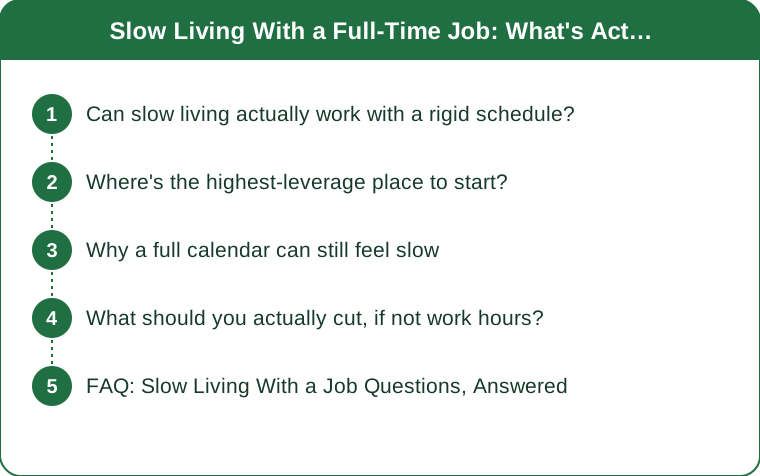
Can slow living actually work with a rigid schedule?
Yes, because slow living was never really about quantity of free time — it’s about reducing the rushed, half-present quality of transitions: waking up already late, eating lunch while scrolling, driving home while mentally still at work.
A full-time job caps how much time you can slow living-ify. It doesn’t cap whether you can — the target just shifts from big blocks of unstructured time to small pockets done with more presence.
Where’s the highest-leverage place to start?
The first 20 minutes after waking and the last 20 before sleep. These are the two transitions most people rush hardest through on a work schedule, and they’re also fully within your control regardless of job demands.
A slower morning doesn’t mean waking up earlier necessarily — it means removing one rushed decision (laying out clothes the night before, a simple default breakfast) so the actual minutes you have don’t feel like a sprint.

Why a full calendar can still feel slow
This is the part that surprises people committed to the aesthetic version of slow living: a packed schedule and a slow feeling aren’t opposites, if the transitions between items are unhurried. Someone with back-to-back meetings who takes 3 conscious breaths walking between them can feel less rushed than someone with a wide-open afternoon spent anxiously multitasking.
The goal isn’t an empty calendar — most working people can’t have one. It’s fewer overlapping mental threads at once, regardless of how full the calendar looks from outside.
What should you actually cut, if not work hours?
Passive scrolling in transition moments — waiting rooms, commute, the 10 minutes before a meeting starts. These feel like rest but usually add mental noise rather than removing it. Replacing even half of that time with genuinely unstructured attention (looking out a window, one slow breath, no input) does more for a ‘slow’ feeling than an extra hour of unscheduled time would.
This is a small, repeatable swap rather than a schedule overhaul, which is exactly why it survives a demanding job when bigger changes don’t.
FAQ: Slow Living With a Job Questions, Answered
Do I need to wake up earlier to practice slow living?
Not necessarily — it’s about reducing rush within your existing wake time, not adding time. An earlier alarm helps some people but isn’t the mechanism.
How do I protect one unscheduled evening a week with a demanding job?
Treat it like a real appointment on the calendar, not a ‘if nothing comes up’ slot — the ones that survive are the ones blocked in advance, not left open to negotiation.
Is slow living just a rebrand of self-care?
They overlap but aren’t identical — self-care is often about specific restorative activities, while slow living is more about the pace and presence of ordinary moments, including work ones.
TL;DR:
- Slow living on a full schedule is about reducing rush in transitions, not adding free hours
- Start with the first and last 20 minutes of the day — fully within your control
- A full calendar can still feel slow if transitions between items are unhurried
- Swap passive scrolling in small gaps for genuinely unstructured attention
You don’t need a flexible schedule to practice this — you need fewer rushed handoffs between the hours you already have.
Keep Reading
This article is for general informational and styling purposes only. Fit, sizing, and product availability may vary.