Why Blocking Unscheduled Time on a Calendar Actually Works Better Than Trying to 'Slow Down'
Deciding to ‘slow down’ rarely survives contact with a calendar that’s already full, because good intentions lose every time to a specific meeting request or task with a deadline attached — unscheduled time only survives if it’s actually scheduled, ironically, as its own defended block.

Why Vague Intentions to Slow Down Rarely Survive a Full Calendar
The scheduling-priority problem: the anything-with-a-specific-time-and-name-beats-a-vague-intention (the concrete meeting requests and deadlines always winning against a general goal to relax more — the specific-beats-vague), the the-unscheduled-time-gets-treated-as-available-by-default (the empty calendar space reading as open for anyone to book rather than protected — the empty-reads-as-available), the the-slowing-down-without-a-plan-becomes-the-first-thing-cut-when-busy (the first casualty of a demanding week being exactly the thing with no calendar defense — the first-thing-cut-under-pressure), and the reframe (an intention losing to anything with an actual time slot attached, which means it needs its own time slot to survive).

The Specific Scheduling Habit That Protects Unstructured Time
What actually works: the block-the-time-on-the-calendar-with-a-real-title (the treating open time as an actual named appointment rather than leaving it blank — the block-it-with-a-title), the the-choose-a-recurring-time-rather-than-a-one-off (the a repeating block being harder to casually skip than a single unrepeated one — the recurring-beats-one-off), the the-keep-the-block-short-enough-to-be-realistic (the a smaller, sustainable block being more likely to actually hold than an ambitious one that gets sacrificed first — the short-and-sustainable), and the frame (a titled, recurring, realistically-sized calendar block being the concrete mechanism that makes unstructured time actually happen instead of just being intended).
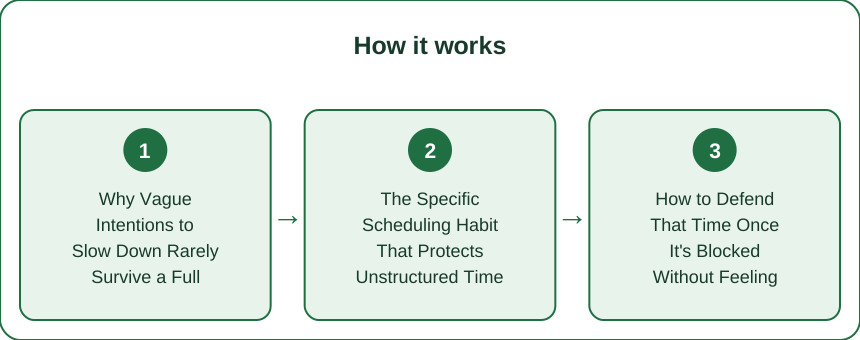
How to Defend That Time Once It’s Blocked Without Feeling Guilty About It
The defense habit: the treat-the-block-with-the-same-seriousness-as-a-work-meeting (the declining conflicting requests the same way a real meeting would be declined — the same-seriousness-as-work-meeting), the the-have-one-ready-response-for-when-something-tries-to-take-the-slot (the a prepared, simple line for pushing back rather than negotiating in the moment — the prepared-response-for-conflicts), the the-notice-that-guilt-fades-once-the-block-becomes-routine (the the discomfort of protecting the time being temporary and specific to the first few weeks — the guilt-fades-with-repetition), and the frame (defending the block like a real commitment, having a ready response for conflicts, and expecting the guilt to fade with repetition — the practical answer to the anxiety around protecting time).
A vague intention to slow down rarely survives a full calendar because anything with a specific time and name — a meeting, a deadline — automatically beats a general goal, and empty calendar space defaults to reading as available to anyone rather than protected, making it the first thing sacrificed under pressure. The fix is blocking that time with a real title, choosing a recurring slot over a one-off, and keeping it short enough to actually be realistic and sustainable. Once it’s blocked, defend it with the same seriousness as a work meeting, keep one prepared response ready for when something tries to take the slot, and expect the guilt around protecting it to fade once the block becomes routine rather than a special exception.
Keep Reading
This article is for general informational and styling purposes only. Fit, sizing, and product availability may vary.