The Slow Morning Routine That Actually Fits Before a 9am Meeting
Quick Answer: A slow morning doesn’t require extra time — it requires removing rushed transitions, which you can do in as little as 25 minutes by protecting one unhurried activity (coffee, journaling, stretching) done without a phone in hand, rather than trying to fit in five slow rituals.
You’ve assumed slow living requires a life with fewer obligations than yours, and a slow morning routine feels like something other people have room for. But the actual ingredient that makes a morning feel slow isn’t extra time — it’s the absence of rushing between things, which fits into a normal weekday more easily than it seems.

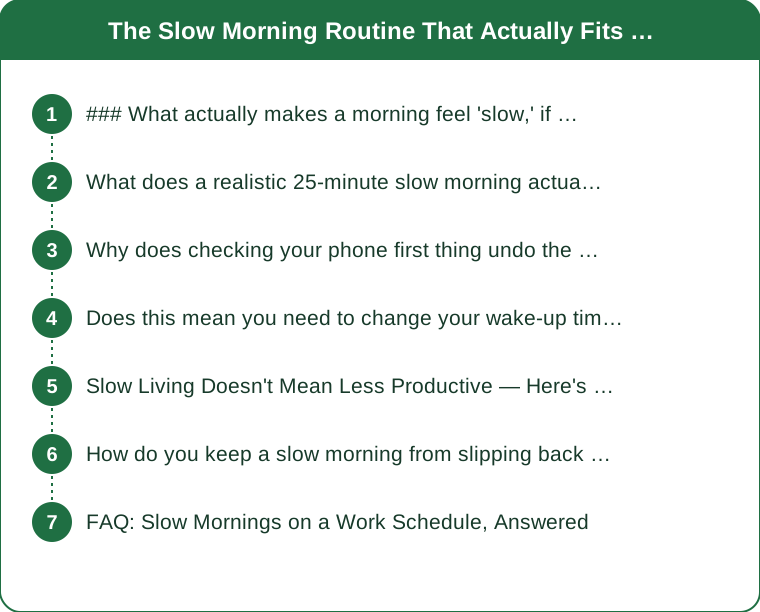
### What actually makes a morning feel ‘slow,’ if it’s not about having more time?
The feeling of slowness comes from doing one thing at a time without simultaneously rushing toward the next thing, not from the total duration of your morning. A 10-minute unhurried coffee, drunk sitting down without a phone, creates more of a slow-living feeling than an hour spent multitasking between six half-finished tasks.
This reframes ‘slow living’ from a time-availability problem into an attention and sequencing problem, which is solvable even on a workday. This intentionally leads with the reframe as the core answer, matching this blog’s Q&A-forward structure.
What does a realistic 25-minute slow morning actually look like?
Wake up 10-15 minutes earlier than strictly necessary (not an hour — just enough to remove the rushed feeling), then protect one activity — drinking coffee sitting down, a few minutes of stretching, or writing one journal sentence — done without a phone anywhere nearby. The rest of the morning (showering, getting dressed, commuting) can happen at normal pace; only one deliberately unhurried anchor activity is needed to shift the whole morning’s feeling.
This single-anchor approach is far more sustainable long-term than trying to slow down every part of the morning at once, which usually collapses within a few days under real schedule pressure.
Why does checking your phone first thing undo the slow feeling so quickly?
Checking notifications, email, or social media within the first few minutes of waking immediately shifts your mind into reactive mode, processing other people’s priorities and requests before you’ve had a single unhurried moment of your own. This reactive shift is very hard to undo later in the morning, even if you technically have time.
Delaying phone contact by even 15-20 minutes after waking preserves the mental space needed for the rest of the slow-morning approach to actually work.

Does this mean you need to change your wake-up time significantly?
Not necessarily — most people find that 10-15 extra minutes is enough to remove the rushed feeling, without requiring a dramatic early wake-up that cuts into needed sleep. Sleep quality and duration matter more for how a morning feels than an extra 30-45 minutes of buffer time would, so the tradeoff isn’t usually worth it beyond a modest adjustment.
Slow Living Doesn’t Mean Less Productive — Here’s Why
A common assumption is that a slower morning must come at the cost of getting less done, but people who protect one unhurried anchor activity often report feeling more focused and less scattered for the rest of the day, not less productive. The slow morning isn’t competing with productivity — it’s setting up the mental state that makes focused work easier later.
This is different from a slow-living lifestyle overhaul; it’s a targeted 10-15 minute adjustment that coexists with a full, demanding schedule.
How do you keep a slow morning from slipping back into rushed habits?
Prepare the anchor activity’s setup the night before — coffee grounds measured, journal on the nightstand, yoga mat already unrolled — so the activity itself doesn’t require any decisions or setup time that could eat into the buffer you created. Removing friction from the one slow activity is what makes it durable on genuinely busy or tired mornings.
FAQ: Slow Mornings on a Work Schedule, Answered
Can a slow morning routine work for someone with kids to get ready too?
Yes, though the anchor activity may need to happen slightly earlier, before children wake, or be adapted to something that can pause and resume, like sipping coffee between getting kids dressed.
What if you’re not naturally a morning person?
The slow-morning approach doesn’t require waking up earlier than you’d like — it can be applied to whatever your existing wake time is, as long as one unhurried anchor activity is protected within it.
Is it okay to skip the slow morning on particularly hectic days?
Yes, completely — an occasional skipped morning doesn’t undo the practice, and returning to it the next day matters far more than perfect daily consistency.
TL;DR:
- Slowness comes from doing one thing at a time, not from having more total time
- One protected unhurried anchor activity is enough to shift a whole morning’s feeling
- Delay checking your phone by 15-20 minutes to preserve that mental space
- Prepare the anchor activity’s setup the night before to remove morning friction
A slow morning isn’t a lifestyle you need permission to have — it’s a 10-minute decision you can make before your very next 9am meeting.
Keep Reading
This article is for general informational and styling purposes only. Fit, sizing, and product availability may vary.