The Lost Art of Waiting: What Happens When You Stop Filling Every Gap With Your Phone
Quick Answer: The dozens of daily micro-waits — queues, kettles, elevators, red lights — were once the mind’s default rest-and-digest moments; now nearly all get filled by reflexive phone checks, deleting the idle time where mental consolidation, ideas, and actual rest happen. The practice: pick 2-3 designated waits daily and just… wait — hands empty, eyes up. Expect genuine discomfort for a week (the reflex runs deep), then the gaps quietly become the calmest parts of the day. It’s mindfulness with zero app, zero schedule, and the lowest barrier in the entire slow-living catalog.
Watch any queue: every single person, phone out, within four seconds of stopping. Nobody decided this — the gap-filling reflex installed itself one notification at a time, and with it went the last pockets of unscheduled mental idle that a day used to contain by accident.

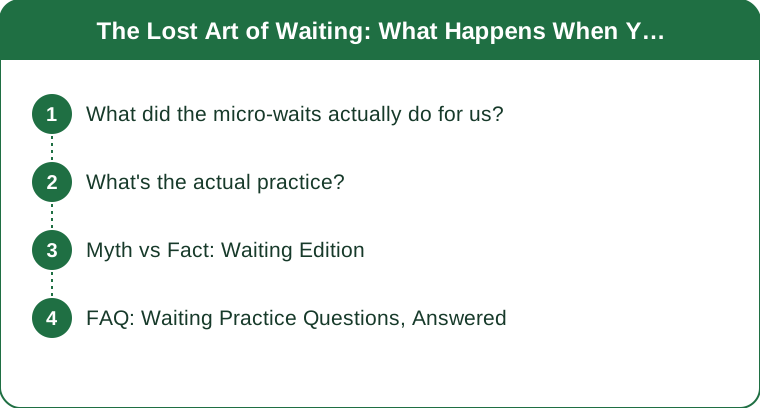
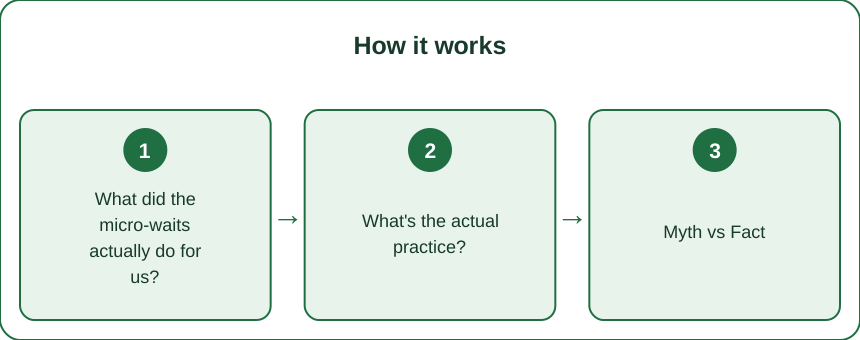
What did the micro-waits actually do for us?
The idle mind isn’t off — it’s running the default mode network: the background processing state where the brain consolidates memory, connects unrelated ideas (the shower-thought generator), digests emotional residue, and simply rests from directed attention.
The old world funded this involuntarily: bus stops, kettle waits, checkout lines — dozens of 30-second-to-5-minute deposits daily, adding up to real accumulated idle. The phone didn’t just fill those gaps; it converted them into their opposite — directed attention plus novelty-seeking, the two things the default mode can’t run alongside.
The compounding cost shows up as familiar modern complaints: the ‘busy but can’t think’ feeling (no consolidation gaps), ideas that only arrive in the shower (the last unphoned wait standing), and the strange exhaustion of days that contained no hard work — attention that never idles never recovers, the same way muscles that never rest never rebuild.
And the reflex itself has a cost independent of content: each gap-fill is a rep of intolerance training — teaching the nervous system that stillness is a problem requiring a solution, which raises the baseline restlessness the next gap inherits.
What’s the actual practice?
The designated-waits method (start embarrassingly small):
- Pick 2-3 recurring daily waits as phone-free zones: the kettle, the school pickup line, the elevator, the pre-meeting minute. Specific beats general — ‘wait more mindfully’ fails; ‘the kettle is a no-phone zone’ sticks.
- The rule is presence, not performance: hands empty (or holding the phone without unlocking — harder, also legal), eyes on the actual world — the queue’s people, the window, the steam. No counting breaths required; this is waiting, not a program.
- Expect the discomfort curve honestly: days 1-3 genuinely itch — the reach-reflex fires constantly and unlocking happens before awareness catches it. That’s not failure; that’s the diagnostic (most people are startled by their own hand). By week two the designated waits typically flip from itchiest to calmest moments of the day.
- The upgrade path: once 2-3 waits are comfortable, the practice spreads on its own — queues stop triggering the reach, and the phone quietly demotes from gap-filler to tool. Add the classic amplifiers if wanted: last-hour-before-bed, first-half-hour after waking, one longer weekly sit.
The environmental assists: phone in the bag (not the hand) while walking, notifications already batched (the pings are what re-arm the reflex), and a pocket notebook for the ideas that — this is the reliable surprise — start arriving in the gaps within the first week.

Myth vs Fact: Waiting Edition
Myth: Filling waits with podcasts and articles is productive use of dead time. Fact: ‘Dead time’ was the living tissue — the consolidation gaps that make the other hours productive. Some filled waits are fine (the commute podcast is a reasonable trade); the problem is the zero-gap day, where efficiency at the micro level quietly bankrupts thinking at the macro level. Keep some waits dead on purpose.
Myth: Boredom tolerance is a personality trait — some people just can’t do stillness. Fact: It’s a trained capacity moving in whichever direction current practice pushes — the same person who can’t survive a 40-second elevator un-phoned in January routinely reports enjoying 5-minute waits by March. The reflex was installed by repetition; it uninstalls the same way.
Myth: This is just mindfulness rebranded — I’d need to learn meditation first. Fact: Waiting practice is pre-mindfulness — no technique, no posture, no app, just not-reaching. It’s the gateway practice precisely because the bar is on the floor, and for many it delivers the noticeable-calm result that formal programs promise, from raw material (the waits) the day already contains. (Formal practice stacks fine on top for those who want it. Persistent restlessness that feels like distress rather than habit — racing thoughts that stillness reliably amplifies — is worth a professional conversation rather than more discipline. This is general information, not medical advice.)
The reframe: the waits were never empty time to be rescued — they were the recovery intervals of the attention system, and the rescue operation was the theft.
FAQ: Waiting Practice Questions, Answered
What do I actually DO while waiting — think about something specific?
Nothing assigned — notice what’s actually there (the specific people, sounds, light) or let the mind wander wherever it goes; the wandering IS the default-mode payoff. The one anti-instruction: don’t convert the wait into a planning session on purpose — arriving thoughts are fine, summoned agendas are just work without the phone.
Red lights and driving waits — same practice?
The best possible venue, with the obvious note that driving-adjacent phone use was already a safety issue wearing a boredom costume — the red-light phone check is the habit most worth breaking on two counts. Eyes-up waiting at lights doubles as the situational awareness driving wanted anyway.
Does this work for kids-in-tow waits, where the phone keeps everyone calm?
Adjust the ambition: the practice targets your reflexive solo gap-fills, not survival tools in parenting logistics. That said, the modeled behavior compounds — kids who watch a parent wait calmly un-phoned are receiving the rarest demonstration in modern childhood, and the waiting-together games (spotting, counting, people-watching) are the family version of the same practice.
TL;DR:
- Micro-waits were the attention system’s recovery intervals — the default-mode gaps where consolidation, ideas, and rest actually happen
- The practice: 2-3 designated phone-free waits daily, hands empty, eyes up — specific zones beat general intentions
- The discomfort curve is the point: itchy for a week, calmest-parts-of-the-day by week two
- Keep some waits dead on purpose; the pocket notebook catches what starts arriving
The queue was never wasted time being rescued by the phone — it was recovery being stolen, four seconds at a time, and it refunds fast. This is general information, not medical advice.
Keep Reading
This article is for general informational and styling purposes only. Fit, sizing, and product availability may vary.